Showing posts with label Home Grown Food. Show all posts

Saturday, August 6, 2011

Homegrown Meals

Beef Veggie stew with HG swiss chard, HG carrots, HG zucchinis, HG tomatoesm HG green beans. Other ingredients include O grass-fed beef, FM(farmer's market) Onion, FM celery, O black pepper, sea salt.
HG swiss chard stems & HG amaranth leaves and stems sauteed with garlic and butter(Earth Balance).
Salad: HG lettuce, cucumbers, cherry tomatoes. The red stuff on the upper right is the chard and amaranth sauté from above. (O) rice and Coho Salmon were purchased.
Mabo Tofu with HG eggplant and HG peppers.
(O)tofu, (O)ground turkey, (O) garlic and (O)rice were purchased
(O)Natto with HG okra and HG green onion.
The natto, seaweed, shirasu and (O)rice were purchased
I made HG tomato sauce, with this, I made Chili and Spaghetti sauce.
Here's the HG Chili with LOTs of HG tomatoes sauce & HG peppers.
Other ingredients are: (O)Kidney beans, (O)black beans, FM round onions, (O)grass-fed stew beef, (O) chili powder and sea salt.
OK, this isn't HG, but I just wanted to add it: Homemade Moca Latte. I save $5~$11 a day by making it myself! Sometimes I have 2 to keep my energy level up. (I used organic coffee, organic coconut milk, organic vanilla extract and stevia drops, oh and a dash of organic cinnamon too!) Yummy :-)

Monday, July 25, 2011

Homegrown Meals

Curry flavored Fried Rice with HG zukes, carrots, green beans, green onions and bell peppers. Other ingredients are organic (O) ground turkey, (O) bulb onion, (O) white rice, sea salt, black pepper and (O) curry powder.
Spagetti with meat sauce: HG tomatoes, HG zukes, HGbell peppers, HG oregano and HG basil. Other ingredients include (O) brown rice noodles, sea salt, mushrooms and (O) bulb onion
Veggie Soup: HG swiss chard, HG zukes, HG carrots, HG tomatoes and HG rakkyo(Allium chinense). Other ingredients include (O) bulb onion, (O) home-made chicken broth, sea salt, (O) coriander and pepper
Turkey hamburger steak, HG swiss chard greens and roasted (HG) carrots and (O) onions


I'll do a Garden Update soon, I promise!

Tuesday, July 5, 2011

Homegrown Meals

Veggie Stir Fry with Turkey Bacon
Shimesaba (vinegared mackerel) locally caught at New Port Beach pier along with pickled Komatsuna (Tsukemono) on rice

A lovely exchange from an awesome friend. I gave her a jar of homegrown strawberry jam and she offered me a bag full of homegrown potatoes! Yum!
I make potato salad with the above potatoes; HG carrots, HG cucumbers & HG sunchokes in there as well. Num num!
Some potatoes made it to a 4th of July BBQ too! The BBQ'd veggies have some HG zucchini, HG tomatoes, and HG peppers too.

Tuesday, June 14, 2011

Homegrown Meals

Here's what I've managed to capture this week. I didn't get a chance to take a pic of the homemade pizza. Although I don't think the pizza counts much for being homegrown since the only thing home-grown was the Oregano and Basil that went into the sauce and the Rosemary that went into the altered gluten-free Focaccia recipe for the dough.

Cold Salad with HG Tomatoes, Cucumbers, Carrots and Sunchokes. It also includes Coho Salmon, Potato Starch Noodles, Vegenaise (our son is allergic to eggs, so no Mayonaise), and Organic Mustard
This is Hiyashi Chuka, HG ingredients are: Carrots, Green Beans, Cucumbers.  Bought items are organic turkey bacon, organic chicken breast, organic bulb onions, and noodles. That and gluten-free soy sauce, organic rice vinegar, toasted sesame oil and organic agave nectar.

Monday, June 6, 2011

Homegrown Meals, No Sugar Strawberry Jam

Homegrown meals, this isn't everything we've eaten through the week, since mealtimes are the busiest times.
Here's a meal with homegrown Zukes, Komatsuna, Carrots and Shungiku. The fried smelt is in potato starch batter, that was store-bought.
Bibimbap without the seasoned ground turkey
(it wasn't finished in time for this pic and I was really hungry)

"Potato" Salad with HG Potatoes, Sun-chokes, Carrots, Cucumbers. Also, eggs from Farmer's Market, and store-bought mayo.  The Sun-chokes aren't to obtrusive if eaten this way.
No Sugar Jam with Stevia and pectin

Thursday, May 19, 2011

Homegrown Meals

Made some Mochi
The inside has "An" made from Broad Beans we harvested.
Daikon radish leaves being pickled
All veggies here are homegrown: Carrots, Chard, Chives and Yu Choy

Tuesday, May 17, 2011

Homegrown Meals

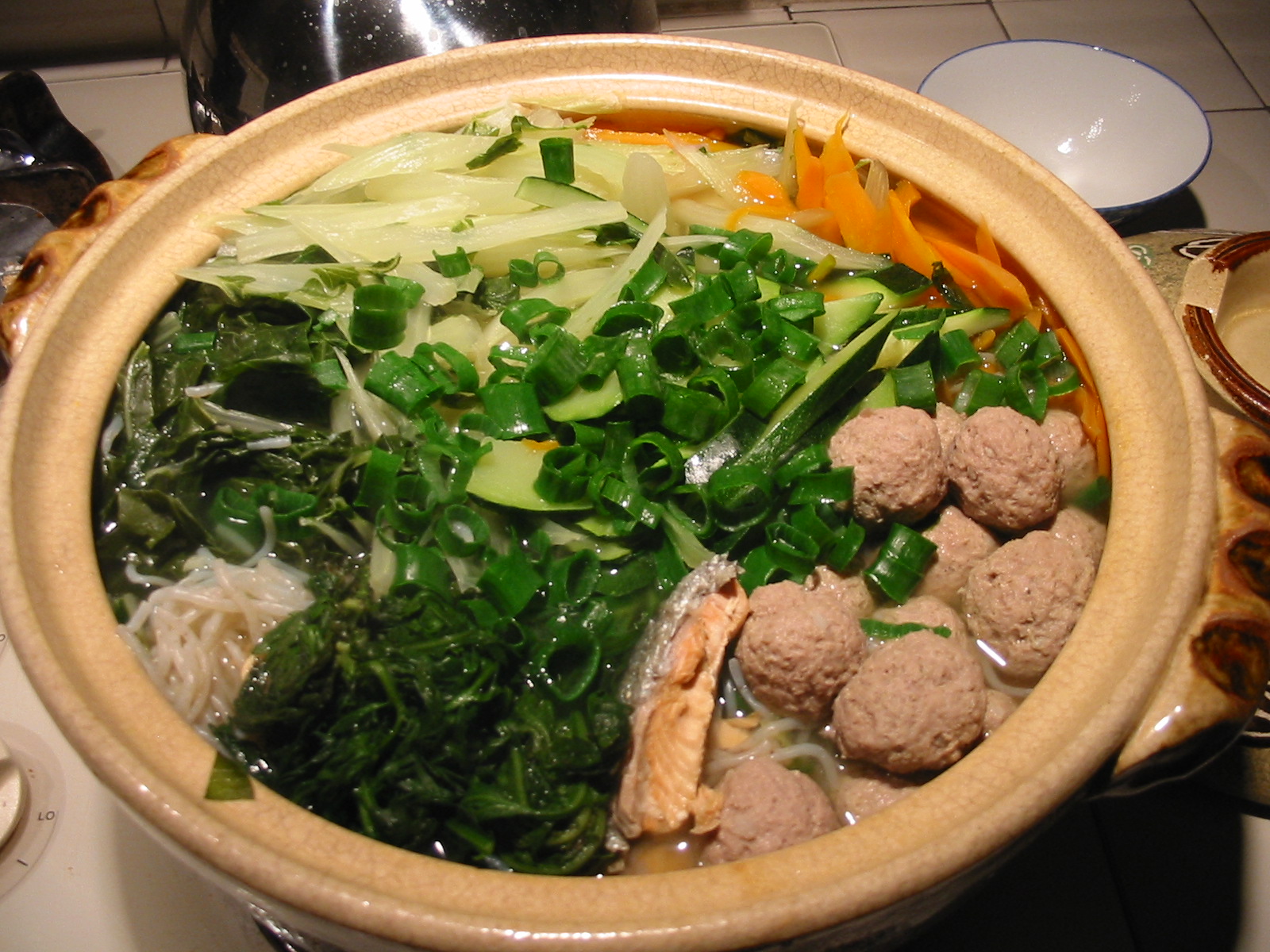
Hot Pot meal for a colder night: HG(home-grown) Carrots, Bok Choy, Shungiku, Green Onions and Zucchini.  Bought items are the Coho Salmon, Ground Turkey, Organic (O) Ginger, (O) Garlic, Sea Salt & (O)Short-grain white rice.
Chinese Stir-fry with LOTS of HG Bok Choy and HG Carrots.
Bought items are Button Mushrooms, Garlic, (O) Chicken,
Sea Salt, Potato Starch for thickening the broth & (O)Short-grain white rice.

My Mom and I take turns cooking, and we don't always take pictures of what we make for dinner, but most of our meals includes at least one thing from the garden.

Tuesday, April 19, 2011

Meals from the garden

Last of the pumpkins from previous season that's being prepared as pumpkin pie. We didn't use any sugar in the recipe. Just some molasses to sweeten the naturally sweet pumpkin flavor. More of a subtle sweetness that we are enjoying as breakfast :-)
Chicken pot pie... could have used more gravy. Homegrown ingredients are: Celery, Carrots, baby potatoes and frozen green beans from last year's harvest.
Veggie stir-fry
Simple strawberry yogurt

Monday, April 18, 2011

Getting Started on Growing Your Own Groceries

I wrote this letter to a friend and thought it was a good one to share for those of you just starting out. 

Growing veggies
It's great that you are trying to grow more food! I have lots of books you can borrow if you'd like. I'm still a learning a lot from my experience of growing food, to maximize our small garden. I think as a gardener, I will always be a student, nature is a tough teacher!

The first and most important thing about growing healthy plants organically, is to nurture the soil. If the soil contains all the nutrients needed for the plant to thrive, insects and disease stay away. Some people even spray nutrients on plants in the form of compost "teas". I compost all non-diseased plants from the garden and from kitchen scraps so that I recycle most of the nutrients back into the soil that way. We even compost tree trimmings as well. If the plant is diseased you should discard the plant matter, or "cook" it until the fungi or insects die off. "Cooking" it under a black tarp on a hot summer day would do the trick.

ATTRA is a great website about growing organically:

Sunlight is crucial to most garden veggies. Lettuce and cilantro actually prefer light shade, esp in the warmer months. Full sun will give you the best results for most everything else.

Watering is another key factor in keeping your plants healthy. Since we're in an arid zone, I try to mulch my plants with grass clippings or unfinished compost to keep the soil moist and save on the water bill as well. Too much water can cause disease such as damping off, or root rot. Some plants need more water than others, it's a matter of learning through experience too.

In terms of disease an insect control, crop rotation is a good way to avoid them as much as possible, but bugs and fungi still happen. "Path To Freedom" website folks have been growing tons(literally) of food for decades and they say the bugs have been attacking in much larger numbers more recently because of the fluctuations in weather from Climate Change. I try to pick bugs off and put them in soap water.

For fungi, I did come up with a good safe mixture to spray for fungi that is prevalent in the cucurbit family(zucchini, cucumbers, melons and pumpkins)
Here's the recipe for it:

Choosing what to grow for which season is important. I discovered that the hard way this year, by trying to grow kale in the summer.(My Mom insisted we eat Kale all year long) Kale and other brassicas (broccoli, cabbage, brussel sprouts, nappa cabbage, daikon radishes) likes cool/cold weather, and summer was harsh for it. The kale ended up being attacked by harlequin bugs and we ended up just digging it out without much harvest. I can lend you some books if you like. The books are written mostly for shorter climate zones so we have to wing it sometimes here in SoCal. The books talk about growing one crop/season in the bed, then rotating the following year. For us, we have such a long growing season, that we can grow about 3 different crops in the same bed. That where it gets tricky, and I'm still learning the process.

To maximize growing as much food as we can is a logistical juggling project, we have to have the next crop growing and ready to transplant once the old crop is finished. I often get too busy juggling freelance work for the studios that I don't have everything growing at the right time. We also have to think about which plants not to plant there next:(same botanical families will be affected by disease). For example, if you are growing tomatoes in one bed, don't plant eggplants, potatoes or peppers there right after it because they are in the same family. Learning which veggies belong to which family helps tremendously.

Learning the veggie family also helps with their feeding "personalities". Brassicas, Cucurbits, Lettuces and Nightshades(tomatoes etc) are very heavy feeders that require a lot of nitrogen. Then there are the light feeders like Carrots, Yams & Onions. Finally, there are the nitrogen fixers: Legume family which include all types of beans and peas. The Legumes don't like manures or too much nitrogen in the soil, in fact too much makes them sick. The trick is to keep all these guys happy by using their "personalities" to your advantage. The heavy feeders should be grown right after the Nitrogen fixers. Once the heavy feeders have spent most of the nitrogen in the soil, you can grow the Light feeders. Then grow the Nitrogen fixers. That's my crop rotation recipe in a nutshell. Throughout the season, amend any lost nutrients by top dressing the plants roots with compost. If you really want to go all out, rock dust is a very good mineral replacer but do be careful on handling it, as the fine rock dust will be harmful to your lungs.

Just remember, start small then expand as you become successful at the first bed. The more you grow the more you'll learn. I will always be learning.  Happy gardening!

Thursday, April 14, 2011

Meals from the Garden

Veggie Stir-fry with home grown Chinese Chives and Carrots
Veggie soup with home grown carrots and celery. Kolrabi and bulb onions bought at the farmer's market, and organic tomato paste bought from a Co-Op. Oh, one store bought item: mushrooms
More strawberries! This is one day's worth of pickings.
My jam jar collection
Curry flavored veggies with chicken. Home grown celery, carrots and sunchokes along with cauliflower from the farmer's market.

Monday, February 7, 2011

Eating the land

Stir fry with home-grown snow peas, bok choi, carrots and organic turkey bacon
Bounty from a city plot. The upper left is a smidgen of the sunchokes that were dug up. On the upper right, thinned out lettuce. Navel oranges on the lower left and Satsuma mandarins on the lower right

Thursday, October 14, 2010

Lotsa Peppers from the Garden! Home Grown Meal

With all the extra pepper harvests, we are adding it to almost every meal we have! This is a stir fry noodle dish called Yakisoba. Yakisoba literally means, grilled/stir fried noodles. We used a gluten free noodle substitute that is normally used for Pad Thai and it worked great! We added Tonkatsu sauce, for the flavoring to mimic the traditional sauce. Tonkatsu sauce tastes is kind of like Worcester sauce but sweeter and thicker. I guess the closest mixture would be Ketchup with generous amounts of the Worcester sauce mixed in.

Here are just the veggies: HG Paprika and Anaheim peppers, Farmer's Market Carrots, Onions and Cabbage.
Here it is with the noodles added. The noodles were cooked separately, slightly undercooked, so it can absorb the extra liquids from the veggies. It was very yummy!

Friday, August 13, 2010

Homegrown Meals

Kung Pao Veggies with Tofu: HG(homegrown) Zucchini, HG Carrots, HG Onions along with organic Tofu and organic celery from the Farmer's Market
Chili con carne: HG Peppers, HG Tomato sauce, HG onions, HG homemade Green Tomato Salsa, neighbor's lemons, organic Kidney and Pinto beans, grass-fed Piedmontese beef, organic chili powder and sea salt
Making more tomato sauce
Stuffed HG tomatoes that has HG peppers, sun-dried cherry tomatoes in organic ground turkey, with organic rice pilaf with HG carrots, HG zucchini and HG green onions  and blanched HG green beans.

Wednesday, July 28, 2010

Homegrown Meals

I've been slacking on taking pictures of our meals, even though we do cook with LOTS of homegrown veggies. That's because I work all day away from home, and I share cooking responsibilities with 3 other adults now. (My hubby, my mom and my brother who resides with us now)
Here's the first batch of sun-dried cherry tomatoes!

Tuesday, July 6, 2010

Harvests and Home Grown Meal

Sun; July 4th, We've got CORN! There's Zucchinis, Cucubmers, Grapes, Strawberries, Cherry Tomatoes, Blackberries and Green Beans too!
Mon; July 5th, Zucchini, Cucumbers, Green and Kyohou Grapes, Green Beans, Strawberries, Blackberries and one Valencia Orange
Homemade Chili, the veggies were cooked in the sun-oven. Homegrown ingredients are: Green Tomatoes, a bit of Paprika Peppers, Homemade Green Salsa, neighbor's Meyer Lemons and Garlic. Other ingredients are: organic kidney and black beans, organic canned tomatoes, Farmer's market onions, grass fed beef, organic chili powder and sea salt